
A Complete Guide to Snow Retention Installation
July 14, 2026
If you live in here in Utah or in a region with heavy winters, you've probably heard the roar of a sudden and powerful roof snow slide, followed by a massive thud. These rooftop avalanches can easily knock off gutters, flatten landscaping, cover paths, smash parked cars, and be a threat to anyone caught in the wrong place at the wrong time. Installing snow retention is the only way to mitigate this, but just slapping on some brackets above the eaves is is often worse, as systems that fail will cause greater damages. This guide breaks down industry terminology, the engineering behind the math, a safe layout, the premium products to trust, and what to avoid.
What is Snow Retention?
The Snow Retention industry uses a lot of terms, which can get confusing fast. While they all serve the same goal of holding back the snow to the roof to prevent sliding, allowing it to melt safely, they do it using different designs
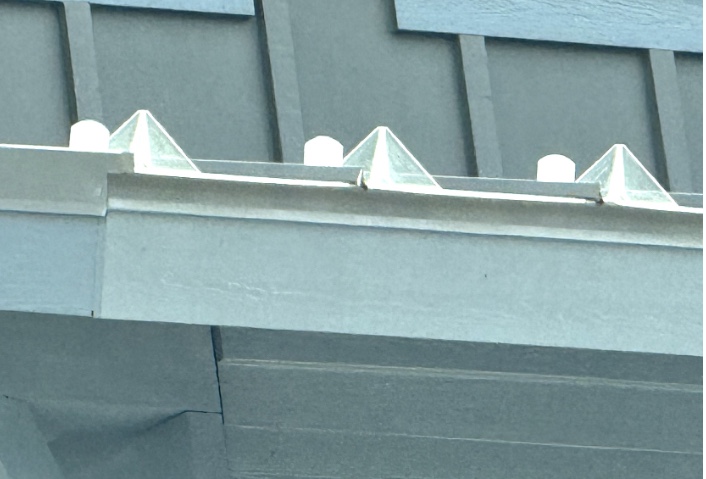
Snow Guards/ Snow Spikes:
These are small, individual brackets attached across the roof face in a staggered pattern. They act like cleats, gripping the bottom layer of the snowpack to keep it from breaking free. They are common on both shingle roofs and metal roofs. Often common in low snow fall areas.
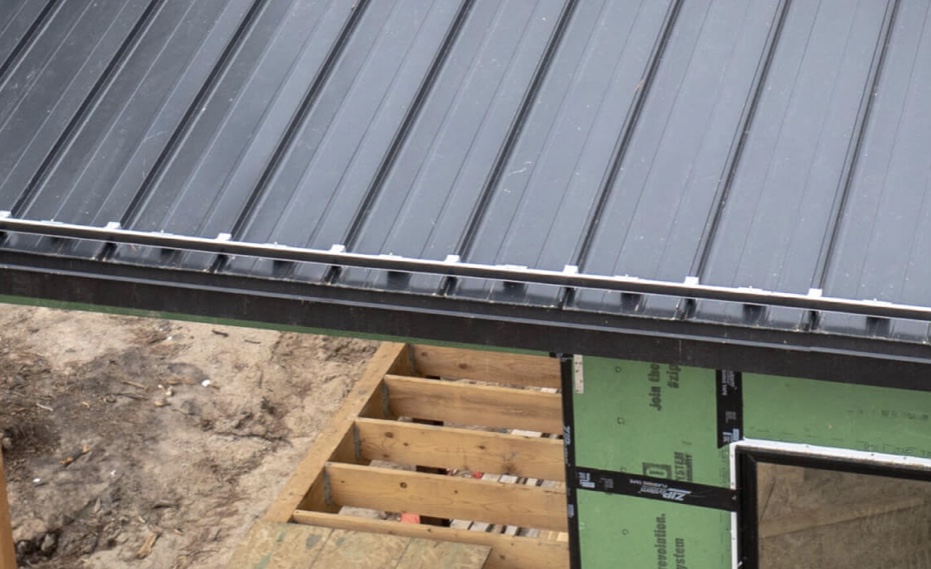
Snow Bars/ Snow Dams:
These typically refer to a single bar-like structure installed across the roof edge. These are designed to hold back medium to large amounts of snow. They can also be installed in multiple rows across the roof as needed. These are highly favored on standing-seam metal roofs because they can often be clamped on without piercing the metal.
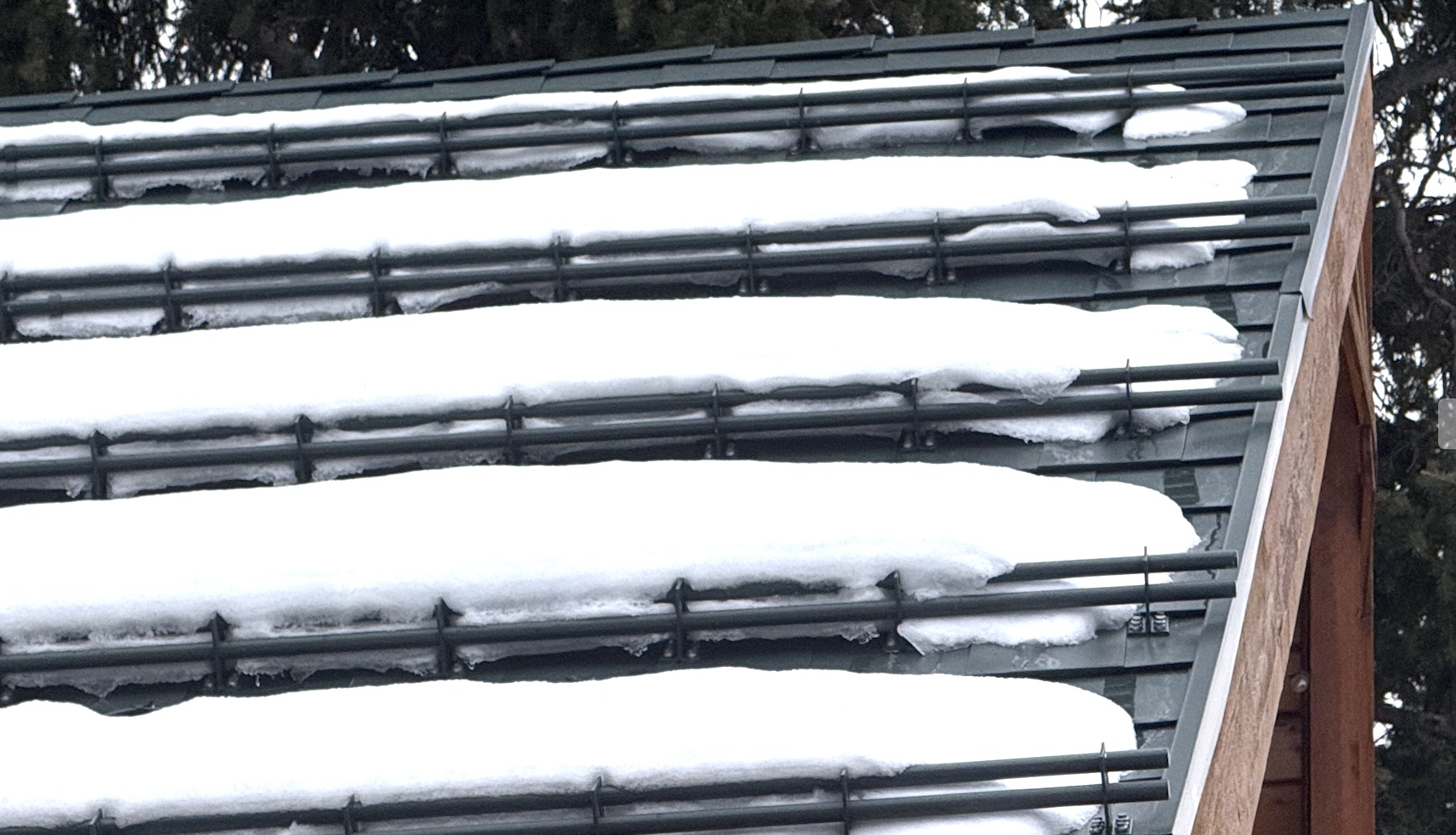
Snow Fence/ Snow Rails:
These are continuous horizontal pipe or bar systems installed near the eaves, often with 2 or more pipes on each row of assembly. They act like a structural fence, blocking the snowpack from sliding forward. These are highly favored on standing-seam metal roofs because they can often be clamped on without piercing the metal.
Guards
Bars
Fence
Guards
Snow guards disrupt the downward movement of snow. They are typically made of poor quality materials like plastic, but not always, and thus are almost always the cheapest choice. Higher quality, powder coated steel or aluminum "guard" snow retention products are available through manufactures like TRA Snow and Sun. These are most commonly found in low snowfall environments with ground snow loads under 30psf (pounds per square foot).
Used in regions with low snowfall, brief snow events, transient snow
Allowable Snow Load: Low
Reliability: Generally Low
Cost: Low
✅ Best for tight budgets in low snowfall areas.
⚠️ Has the possibility of failure during large snow events, potentially breaking the bracket due to point concentrated loads. It Lacks a distributed load across all brackets.
⚠️ Usually cheaply made and installed: It probably won't last the lifetime of your roof and will need to be replaced.
⚠️ These snow retention products often lack details or additional information on load testing or engineering. A durable, long lasting snow retention system will have abundant testing to determine accurate allowable loads.
⚠️ A massive snowpack will over-top or "crest" right over the guards as it compresses and slides against the retention, allowing the top layers to avalanche off the roof anyway. Taller snow fence is required to hold back the entire vertical depth of the snowpack.
Bars
Snow bars hold back the snow to the roof. Most projects utilize bar systems as they are the most cost effective snow retention. The quality of materials for bar systems increases significantly when compared to spikes, although there are still lesser-qualified systems on the market to hold back the snow. These are most commonly installed on normal pitched roofs, or in areas with moderate ground snow loads ranging from 30psf- 115psf.
Used in regions with moderate snowfall, persistent snow, or lingering snowfall
Allowable Snow Load: Moderate-High
Reliability: High
Cost: Moderate
✅ The most cost effective solution to "doing it once, doing it right". Color strip matching for products like S-5! Colorgard 2.0.
✅ Manufacturer software used to calculate a custom-engineered layout to distribute snow loads across the roof.
✅ *No holes in your roof. Retention systems clamp onto mechanical roof seams for standing seam metal roofs.
⚠️ A massive snowpack will over-top or "crest" right over the bars as it compresses and slides against the retention, allowing the top layers to avalanche off the roof anyway. Taller snow fence is required to hold back the entire vertical depth of the snowpack.
⚠️ Hardy Rib or other snow retention installed with minimal sheet metal screws will not carry the same holding capacity as a load tested or engineered system.
Fence
Snow fences hold back large accumulations of snow to the roof. These are the high end systems designed for the hardest snow environments and are typically assembled with painted powdered coated steel or aluminum. These are most commonly installed on steep pitched roofs, roofs with large eave to ridge distances, or in areas with large ground snow loads ranging from 100psf- 250psf+.
Used in regions with heavy snowfall or snowpack snow areas (doesn't melt till spring)
Allowable Snow Load: High-Extreme
Reliability: High
Cost: Expensive
✅ Best for tons of snow, exact color matching to the roof systems.
✅ Manufacturer software used to calculate a custom-engineered layout to distribute snow loads across the roof. Completely engineered layouts are more easily available for fence systems.
✅ *No holes in your roof. Retention systems clamp onto mechanical roof seams for standing seam metal roofs.
⚠️ These systems typically have a longer lead time as custom paint powder coat products require more time, which could push back project start time schedules.
* Systems installed on exposed fastener, asphalt shingle, or other kinds of roofs will be installed onto rafters or trusses, these systems should be installed with butyl or other roof water sealing measures.
The Math Behind The System: How Much Do You Need?
You cannot guess your way through a snow retention layout. If you don't install enough snow retention, the weight of the snow will simply rip the brackets or clamps off the roof, potentially causing severe damage.
To determine exactly how many brackets, rows, or clamps your roof needs, an installer must calculate the vector force for your specific roof design. This calculation relies on 3 critical factors: the pitch of the roof, the eave to ridge distance, and the local ground snow load. Steeper roofs generate significantly higher sliding forces. A Longer run from the ridge to the ease means a larger volume, and weight, of snow pressing down on the system. The ground snow load varies widely by location and elevation.
Do I need my snow retention/ guard system engineered?
Not necessarily. Ideally, at a minimum, snow retention and snow guard systems should be calculated using manufacturer guidelines (such as the S-5! Snow Retention Calculator) to ensure the allowable holding capacity of the snow system is adequate to hold the snow loads of your specific city or region. Generally, fully engineered system are more expensive. We recommend large projects or areas with snow loads above 100psf to be fully engineered. Some local building codes do required fully engineered systems. Don't just guess how much you need, calculate it.
Consulting the Data Bases
To find your specific ground snow load, engineers and professional installers do not look at average annual snowfall. They look at maximum historical weight loads measured in pounds per square foot (psf). Local governments and municipalities establish set ground snow load standards for buildings and structures. Refer to your plans for ground snow loads. When plans are not readily available, refer to one of the following tools.
ASCE Hazard Tool: Managed by the American Society of Civil Engineers:
This tool allows you to plug in your exact geographic coordinates to determine the mandatory structural design loads (including snow, wind, and seismic activity) for your specific parcel of land. This tool typically shows high ground snow load values than what your local city may require.
The USU Ground Snow Load Database
For properties in the Intermountain West, the Utah State University (USU) Ground Snow Load study is the gold standard. It provides highly localized, altitude-adjusted snow load data that accounts for micro-climates that broader national tools might miss.
Once you know your local psf rating (for example, 50 psf) and your roof dimensions, you can calculate the total weight your roof will hold and space your retention brackets accordingly. The following is an example calculation using S-5!'s online snow retention calculator the following information:
Product: ColorGard 2.0
Roof Type (Example):
ASC Roofing Products: Skyline Roofing
Panel Width 16" | Seam Height: 1"
Roof Specs (Example):
Pitch: 4-12 | Ground Snow Load: 50psf | Eave to Ridge: 20ft

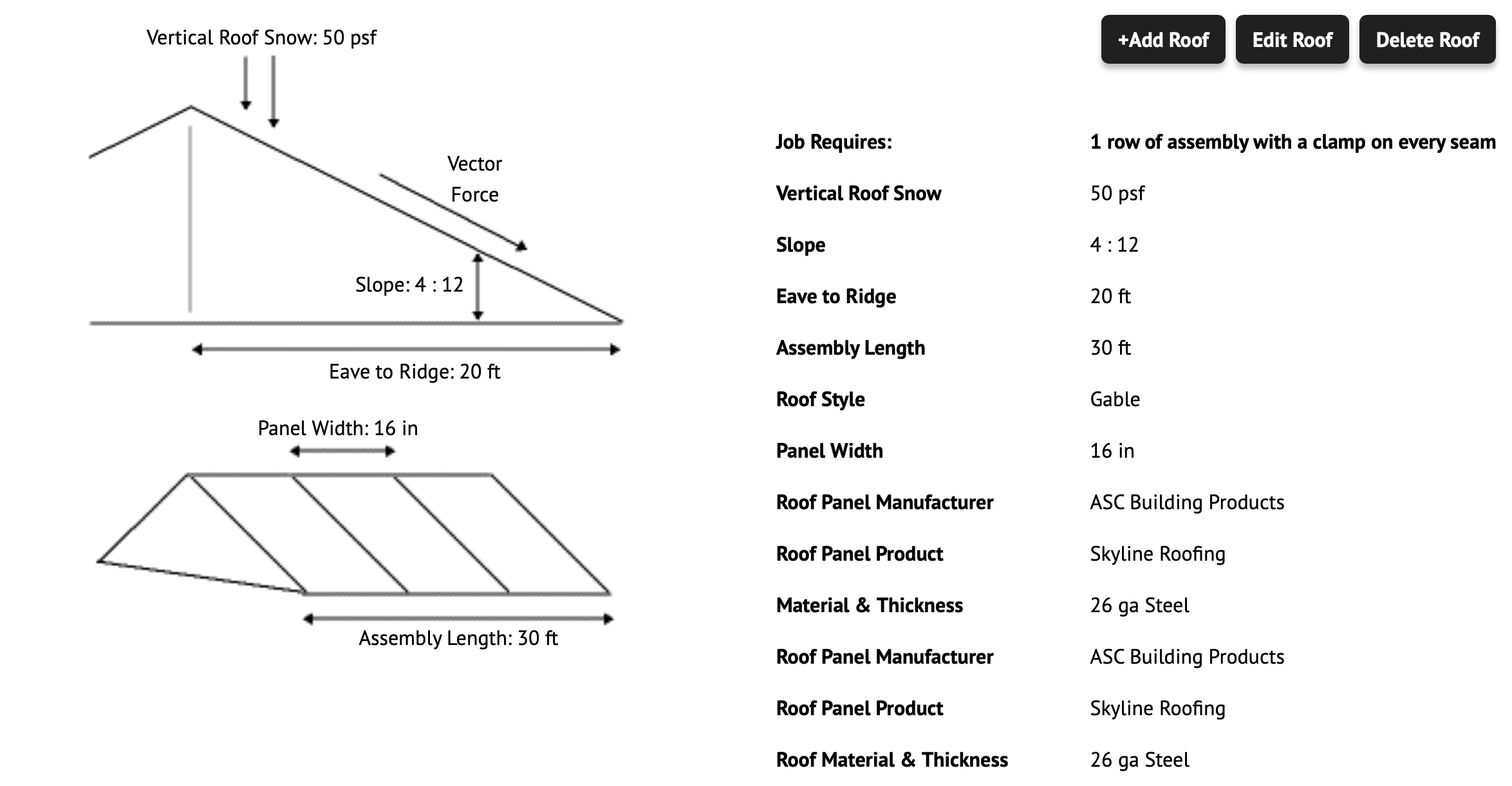

Based on this example, the service load (design vector force per panel) is 421.6 lbs per clamp, while the allowable load is 552 lbs per clamp. To determine the required snow retention, divide the service load by the allowable load:
Required Rows= Allowable Load/Service Load
552 lbs/ 421.6 lbs=0.764 rows
Always round up to the next full row, meaning this system requires 1 full row of ColorGard 2.0.
If the service load exceeds the allowable load, additional rows are required. For example, an 800 lb service load would require 1.449 rows (800/552), which rounds up to 2 full rows. Rows are best installed equally across the roof line, 2 rows would dictate that one row be installed at the roof edge and the other about half way up.
Note: Allowable clamp loads may vary based on the specific roof profile and substrate.
Choosing the Right Premium Products: S-5! and TRA Snow & Sun
The components you choose must be backed by rigorous, independent laboratory testing. Two of the most trusted names in the industry are S-5! and TRA Snow & Sun.
S-5! Snow Retention Products
S-5! is the undisputed pioneer in metal roof attachments. Their snow retention systems (like the ColorGard 2.0® bar-rail system) utilize round-point setscrews that compress against the standing seams of a metal roof.
This creates an incredibly strong attachment without piercing the metal, preserving your roof's warranty. Crucially, S-5! provides comprehensive engineering charts and online calculators based on real, physical pull-test data for almost every metal roof profile on the market.
TRA Snow & Sun Products
TRA Snow & Sun excels in offering highly customizable solutions for every imaginable roof type, including concrete tile, slate, asphalt shingle, and standing seam metal. Their systems, which range from single snow brackets to heavy-duty snow fences, are engineered to order. They take your specific ASCE hazard data and design a layout custom-fit to the architectural demands of your building.
The market is filled with local roll-formers and unrated manufacturers offering generic snow fence designed to match specific metal panel profiles. A prime example of what to look out for is unrated snow rails designed for exposed-fastener panels, such as generic Hardy Rib Snow Rails. While these rails might match the color of your roof perfectly and look neat, they often come with a major hidden risk. The allowable load cannot be mathematically determined. In General, If a manufacturer of a snow retention product cannot provide certified engineering reports detailing the exact point of failure (the allowable parallel load per bracket), you are playing roulette with your roof.
Conclusion: Do it right the first time
Snow retention is a critical safety feature, not a cosmetic upgrade. To protect your property, ensure your system is designed using localized data from resources like the ASCE Hazard Tool or the USU database, and stick strictly to vetted, rigorously tested hardware from manufacturers like S-5! and TRA Snow & Sun. Investing in a software calculated or professionally engineered system in the fall is the only way to ensure peace of mind when the heavy snow begins to stack up in January.
Ready to get started? Contact Nordic Solutions for a free quote and professional advice on keeping your roof snow and ice-free all winter long.